

The Importance of Pre-Season Physicals for Student Athletes

Dr. Farhan Rafi, MD
September 15, 2025
As the team physician for Anna High School, I've seen how valuable pre-participation physical examinations (PPEs) are for keeping young athletes safe. While these "sports physicals" are required by most schools, they're much more than just a checkbox—they're an opportunity to identify potential health risks before they become serious problems on the field.
What is a Pre-Season Physical?
A pre-participation physical examination is a medical evaluation designed specifically for athletes. Unlike a routine annual check-up (though it can complement one), a sports physical focuses on identifying conditions that could:
- Put an athlete at risk during physical activity
- Affect their ability to participate safely
- Require treatment or monitoring during the season
The goal isn't to disqualify athletes from sports—it's to ensure they can participate safely and help manage any conditions that might affect their performance or health.
What Happens During the Exam?
A comprehensive sports physical includes several components:
Medical History Review
This is actually the most important part of the exam. We'll ask about:
- Personal health history: Past surgeries, hospitalizations, chronic conditions, medications, and allergies
- Family history: Especially concerning are sudden cardiac death, heart conditions, or early heart disease in family members under 50
- Previous injuries: Concussion history, joint injuries, stress fractures
- Symptoms during exercise: Chest pain, excessive shortness of breath, dizziness, fainting, or palpitations
Parent Tip
Be thorough and honest on the health history form. Conditions that seem unrelated to sports can sometimes be very important. If your child has ever fainted during exercise, experienced unusual shortness of breath, or has a family member who died suddenly before age 50, make sure to mention it.
Physical Examination
The physical exam evaluates:
- Vital signs: Height, weight, blood pressure, pulse
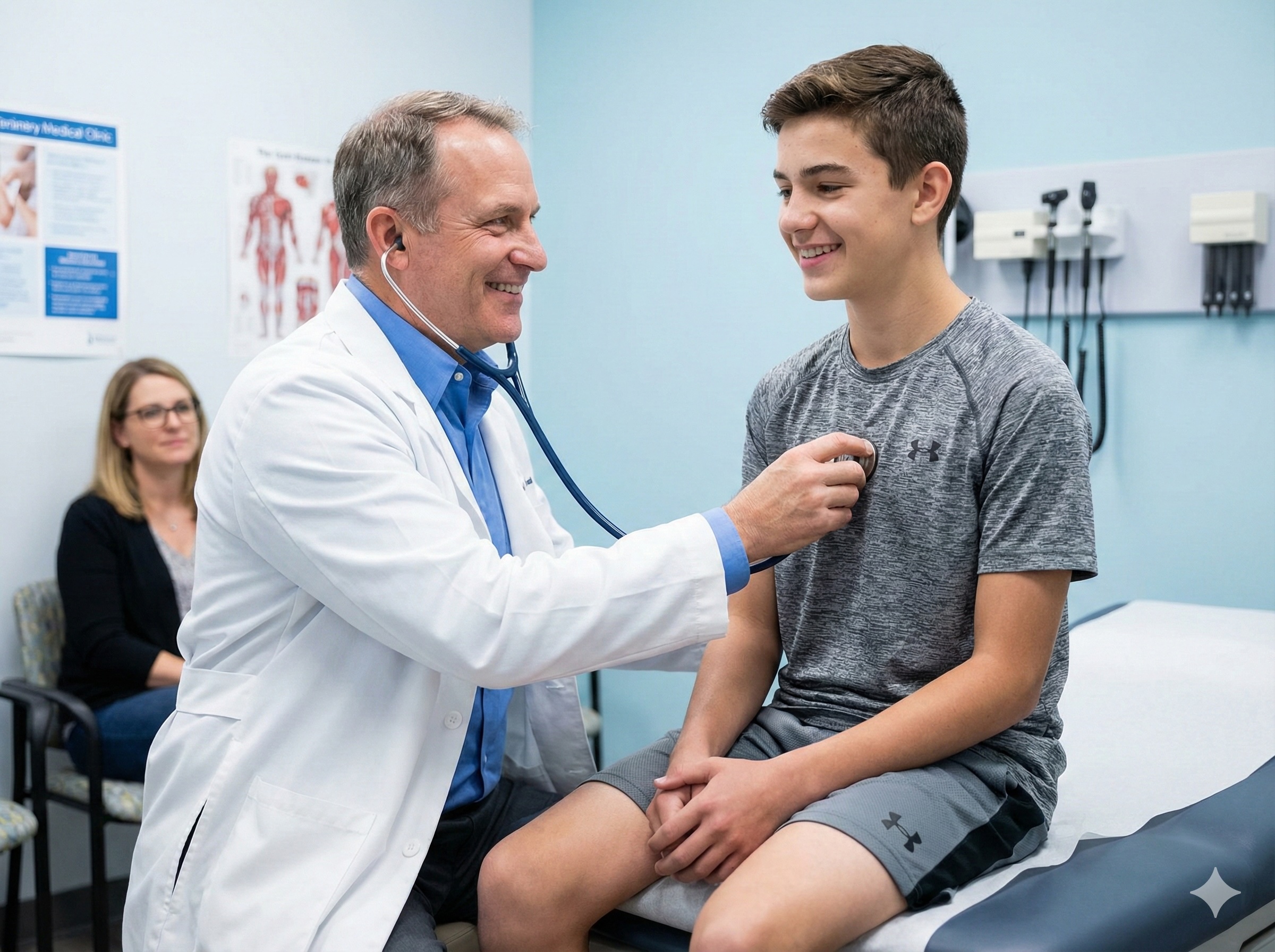
- Heart and lungs: Listening for murmurs or abnormal rhythms
- Musculoskeletal system: Assessing strength, flexibility, and joint stability
- Previous injuries: Ensuring old injuries have healed properly
- Vision: Basic vision screening
Conditions We Screen For
Cardiac Conditions
While rare, sudden cardiac arrest in young athletes does occur and is often caused by undiagnosed heart conditions. We listen carefully for heart murmurs and ask detailed questions about symptoms during exercise and family history. If anything concerning is found, we may recommend further testing like an ECG or echocardiogram before clearance.
Concussion History
Athletes with previous concussions need careful evaluation. We assess whether they've fully recovered and discuss return-to-play protocols. This is also a good time to establish baseline cognitive function testing for future reference.
Musculoskeletal Issues
Growing bodies are susceptible to overuse injuries. We look for signs of conditions like:
- Osgood-Schlatter disease
- Scoliosis
- Previous injuries that haven't fully healed
- Muscle imbalances that could predispose to injury
Other Considerations
- Asthma: Ensuring it's well-controlled, especially for outdoor sports
- Heat-related conditions: History of heat illness or risk factors
- Single paired organs: Athletes with one kidney, eye, or testicle may need special considerations for certain contact sports
When to Schedule
Don't wait until the week before practice starts! Schedule the physical at least 4-6 weeks before the season begins. This allows time for:
- Following up on any concerns that arise
- Completing any additional tests if needed
- Addressing minor issues before they become problems
- Getting proper documentation to the school
Good to Know
While a sports physical can uncover important health issues, it's not a substitute for an annual wellness exam. The sports physical is focused specifically on athletic participation, while a regular check-up covers broader health topics including immunizations, development, and preventive care.
Making the Most of Your Visit
To get the most from the pre-season physical:
- Complete the health history form thoroughly before the appointment
- Bring any previous medical records related to injuries or conditions
- Write down any questions or concerns ahead of time
- For younger athletes, a parent should attend to provide family history
- Wear comfortable clothes that allow for movement testing
Ready for a Great Season
A thorough pre-season physical gives athletes, parents, and coaches peace of mind. When I clear an athlete to participate, everyone can feel confident that we've done our due diligence to ensure they can play safely.
If your student athlete needs a sports physical, or if you have concerns about any health issues that might affect their participation, I'm happy to help. Let's work together to keep your young athlete healthy and performing their best.
Dr. Farhan Rafi, MD
Primary Care & Sports Medicine Physician
Dr. Rafi is board-certified in Family Medicine and Sports Medicine. He serves as the team physician for Anna High School and is passionate about keeping young athletes safe and healthy.
View Profile