

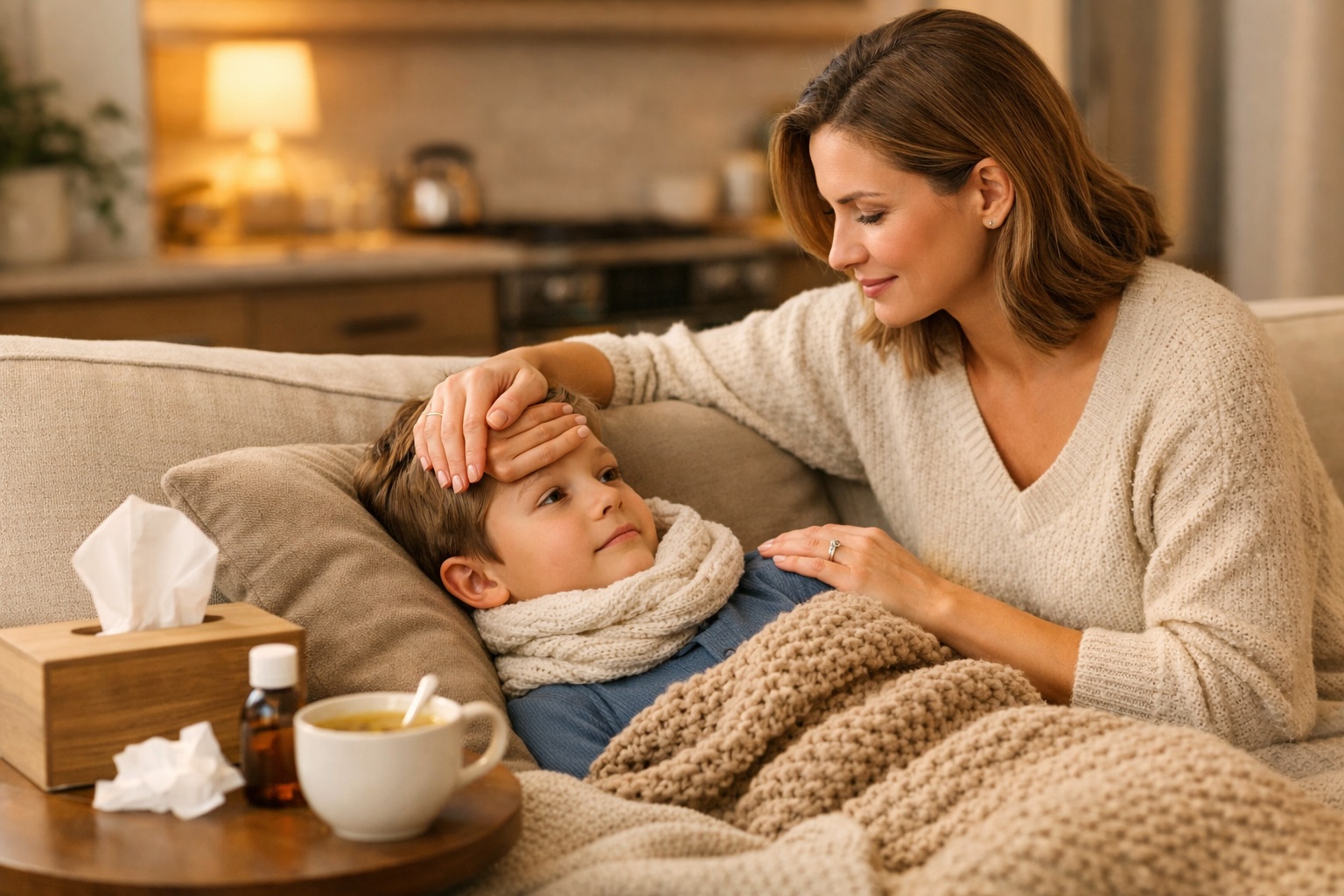
Cold and Flu Season 2026: Protecting Your Family at Work and School

Dr. Samar Aslam, MD
January 10, 2026
January through March is peak season for respiratory illnesses, and my schedule fills up quickly with families dealing with coughs, fevers, and congestion. With kids back in school and adults returning to offices after the holidays, illness spreads rapidly in our communities. Here's what's circulating this year and how you can help protect your family.
What's Going Around This Season
Every winter brings a mix of respiratory illnesses. This year, I'm seeing the usual suspects in my practice:
Influenza (The Flu)
Flu activity typically peaks between December and February. The flu is more than a bad cold—it comes on suddenly and can be severe, especially for young children, older adults, pregnant women, and people with chronic health conditions. Common symptoms include:
- High fever (often 101-104°F)
- Body aches and chills
- Extreme fatigue
- Headache
- Dry cough and sore throat
RSV (Respiratory Syncytial Virus)
RSV is especially concerning for infants and older adults, but it can affect anyone. In healthy adults and older children, it often looks like a regular cold. Watch for:
- Runny nose and congestion
- Coughing and sneezing
- Mild fever
- In infants: difficulty breathing, wheezing, or poor feeding
COVID-19
COVID continues to circulate, though for most people symptoms are milder than in earlier years. It can still cause significant illness, particularly in vulnerable populations. Current symptoms often overlap with cold and flu, making testing helpful for accurate diagnosis.
Common Cold
Caused by over 200 different viruses, the common cold remains the most frequent illness I see. Symptoms are usually milder than flu and develop gradually—runny nose, sneezing, mild cough, and low-grade fever.
Strep Throat
Unlike viral illnesses, strep throat is bacterial and requires antibiotic treatment. Signs that suggest strep rather than a viral infection include severe sore throat without cough, swollen lymph nodes, fever, and white patches on the tonsils.
Stomach Bugs (Norovirus)
Norovirus causes sudden vomiting and diarrhea and spreads extremely easily in schools and workplaces. It's often called the "stomach flu" but isn't related to influenza. Symptoms typically last 1-3 days.
Prevention Strategies That Work
While we can't avoid all exposure, these evidence-based strategies significantly reduce your family's risk:
Hand Hygiene
Proper handwashing remains one of the most effective ways to prevent illness. Wash hands with soap and water for at least 20 seconds:
- Before eating or preparing food
- After using the bathroom
- After blowing your nose, coughing, or sneezing
- After being in public spaces
- When arriving home from school or work
Hand sanitizer with at least 60% alcohol is a good backup when soap and water aren't available, but it's less effective against norovirus.
Avoid Touching Your Face
Viruses enter your body through your eyes, nose, and mouth. The average person touches their face dozens of times per hour without realizing it. Being mindful of this habit, especially in public spaces, can reduce transmission.
Support Your Immune System
A healthy immune system is your best defense. Focus on:
- Sleep: Adults need 7-9 hours; children need even more. Sleep deprivation significantly weakens immune response.
- Nutrition: A balanced diet rich in fruits, vegetables, and whole grains provides the nutrients your immune system needs.
- Hydration: Staying well-hydrated helps your body function optimally.
- Stress management: Chronic stress suppresses immune function. Find healthy ways to manage daily pressures.
- Regular exercise: Moderate physical activity supports immune health (but avoid overtraining when you're feeling run down).
Clean High-Touch Surfaces
Viruses can survive on surfaces for hours to days. Regularly clean doorknobs, light switches, phones, keyboards, and remote controls, especially when someone in your household is sick.
A Note on Vaccines
Vaccines are available for flu, COVID-19, and RSV (for certain populations). I understand that vaccine decisions are personal, and families have different perspectives. If you have questions about whether any vaccine might be appropriate for your situation, I'm happy to discuss the current options, potential benefits, and any concerns you have. My role is to provide you with information so you can make informed decisions for your family.
When to Stay Home
One of the most important things you can do is keep sick family members home. This protects classmates, coworkers, and the broader community. Generally, stay home when experiencing:
- Fever: Stay home until fever-free for at least 24 hours without fever-reducing medication and your overall symptoms are improving.
- Vomiting or diarrhea: Wait until symptoms have stopped for at least 48 hours (especially important for highly contagious stomach viruses like norovirus).
- Severe symptoms: Persistent cough, significant fatigue, or feeling too unwell to participate in normal activities.
- Early illness: The first few days of symptoms are often when you're most contagious.
I know staying home can be challenging for working families. But sending a sick child to school or going to work ill often prolongs illness and spreads it to others. For the first 5 days after returning to normal activities, take extra precautions when possible (for example, improved ventilation, good hand hygiene, and masking in close indoor contact) to reduce spread.
Home Care for Mild Illness
Most respiratory illnesses can be managed at home with supportive care:
- Rest: Your body needs energy to fight infection. Allow time for recovery.
- Fluids: Stay well-hydrated with water, broth, herbal tea, or electrolyte drinks. Avoid excessive caffeine and alcohol.
- Fever and pain relief: Acetaminophen or ibuprofen can help with fever, body aches, and headaches. Follow dosing instructions carefully, especially for children.
- Honey for cough: For children over 1 year and adults, honey can soothe coughs and sore throats. (Never give honey to infants under 1 year.)
- Humidity: A cool-mist humidifier can ease congestion and coughing.
- Saline: Nasal saline drops or spray can help clear congestion, especially in young children.
When to Seek Medical Care
While most illnesses resolve on their own, certain symptoms warrant a call to your doctor or a visit:
- Difficulty breathing or shortness of breath
- High fever that doesn't respond to medication or lasts more than 3-4 days
- Severe or worsening symptoms after initial improvement
- Signs of dehydration: decreased urination, dry mouth, dizziness, or (in infants) no wet diapers for 6+ hours
- Symptoms in high-risk individuals: Very young children, elderly adults, pregnant women, or those with chronic conditions
- Severe sore throat with fever and no cough (possible strep throat)
Seek Emergency Care For
Difficulty breathing or rapid breathing, bluish lips or face, severe chest pain, confusion or difficulty waking, seizures, or signs of severe dehydration. In infants, also watch for inability to feed and inconsolable crying.
Staying Healthy Together
Cold and flu season is inevitable, but severe illness doesn't have to be. By practicing good hygiene, supporting your immune system, keeping sick family members home, and knowing when to seek care, you can help your family navigate this season more smoothly.
If your family is dealing with illness that isn't improving, or if you'd like to discuss prevention strategies including whether vaccines might be right for your situation, I'm here to help. Together, we can keep your family as healthy as possible this winter.
Dr. Samar Aslam, MD
Primary Care Physician
Dr. Aslam is a board-certified Family Medicine Physician with a special interest in women's health, mental wellness, and geriatric care. She believes in treating the whole person and creating a warm, supportive environment for her patients.
View Profile